

Microgreens & Shoots
PDF download: Download the printable PDF version of this article.
Presented to the Dryden Horticultural Society on March 17, 2026 at the Dryden & District Agricultural Centre.
1. Section, Microgreens/Sprouts – Who are they?
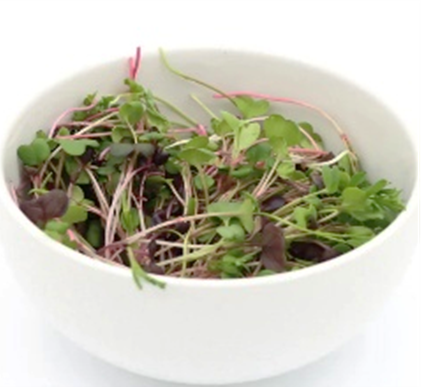
1.1. What is a Microgreen?
Microgreens are tender greens[2] harvested at an immature stage[3] typically before true leaves show. The life cycle can be as short as 10-14 days like: Radish, Broccoli, Cabbage, Fenugreek, Clover, and others, but others can be as long as 16-25 days like: Amaranth, Basil, Beets, Sorrel, Carrots, and others, too.[4] All grown in soil or substrate.2 A quick note is that some microgreens are shoots, but not all shoots are microgreens. Some shoots can come from an older plant (Asparagus, Bamboo, and Fireweed) or be harvested past the immature stages (Peas, Wheatgrass, and Fava Bean) thus not making those shoots eligible to be considered microgreens.
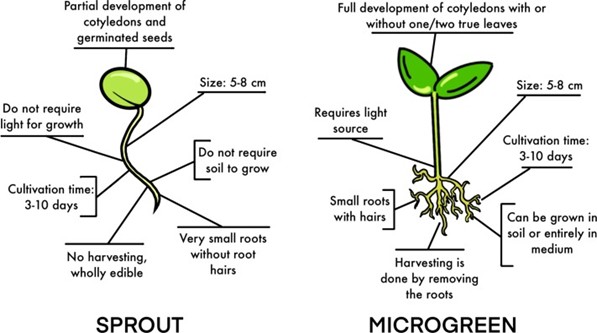
1.2. What is a Sprout?
Another agricultural crop is just like microgreens, but more commonly germinated in a soilless medium including drums, trays, bins, or racks.2 The entire plant (root, seed, and shoot) is usually harvested in 3-5 days[5] like: Mung Beans, Alfalfa, Chickpea, Red Clover, Soy, Lentil, and others of course.
1.3. What’s the history behind these two?
The timeline regarding sprouts starts back 3000+ years ago with the Egyptians as they grew sprouts for food,4 and the Chinese Han destiny around 100 CE that would grow sprouts for medicinal purposes.[6] Sprouts have been used and consumed for many generations; however, microgreens started around the 1980s in San Franisco.4 In just less than 10 years by the 1990s you were able to find the young greens as pretty garnishes with a nutrient overtone on dishes throughout all of California. In present times, they have spread because of their health benefits, their unique colours and textures besides the culinary arts exploring the bold flavours with mild or spicy tastes.
2. Are they all the same?
2.1. What colours can they be?
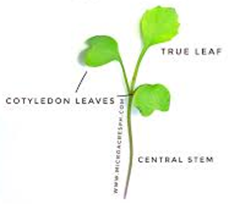
Sprouts are limited because of lack of chlorophyll as they grow in the dark, so the only colours are white, yellow, and green. Microgreen colours can vary in a beautiful range of bright brilliant purples, yellows, reds, pinks, light greens, whites, or dark greens. The colours can be a complete single colour or mix-and-match on the stems and seed leaves (Cotyledons). The microgreen can be completely light green or have a yellow stem with a green top.
2.2. What are the flavours?
The flavours can change from Radish and Arugula being spicy and peppery, peas and basil being sweet, or sunflower shoots to be earthy flavour. The flavour deals with the concentration of certain compounds the micro or shoot may have before being harvested. Some of these compounds come into play as defensive reactions of a plant trying to ward off pests or changes in the concentration of compounds because of stress. The spicy/pungent flavour you can find in the Brassicaceae family (radish, mustard, arugula) comes from the compound called Glucosinolates. These compounds have byproduct compounds that add to the bitterness flavour.[7] The geosmin compound is the one that gives off the flavour of earthy tones that you can find in sunflowers and beets.[8]
2.3. What are the different benefits?
In the 1980s-90s, you could find microgreens and sprouts on dishes in most top-end restaurants because of their presentation. For a mix-and-match rainbow it only took a handful of greens in the center of a plate to give it that shine. We still put microgreens and shoots as a garnish, but nowadays we look at them in a different light. We look at them more through the eyes of, “what can you do for my health?” We knew then that the benefits of vegetables, young or old, will always be good for your health, but now the benefits of these young greens are the focus in a lot of kitchens outside of the restaurant world.
Microgreens can be rich in compounds like phenolic that contribute to act as antioxidants in the human body1. Some vitro (controlled non-living environment) and vivo (experiments performed within a living organism) studies of microgreens have shown microgreens to have anti-inflammatory, anti-cancer, anti-bacterial, and anti-hyperglycemic properties.4 Different plants contribute different vitamins, minerals, and compounds that can benefit us, but the key factor is the help these little fighters give against malnutrition known as the hidden hunger.[9] We don’t get enough of our macronutrients, and we find out what we are lacking when it’s too late and there are symptoms or illness. If you don’t have time or energy to cook some greens for the day, then get a handful of micros to throw on a dish and get your nutrition that you need to properly function before symptoms start to be acquired with the proper energy and diet.
2.4. Can anything be a Microgreen/Sprout?
No! You shouldn’t eat shoots or microgreens from the nightshade family (Potatoes, tomatoes, peppers, and eggplant)[10] because just like Rhubarb, fruit trees, red kidney beans, and a lot of different squashes, they can be poisonous from toxins like lectins. They can get your stomach uneasy or can lead to death from ingesting too much of these compounds that young plants tend to have to fight intruders. Stick to what you know or do a little research to protect yourself!
2.5. What should I be cautious about?
You need to be worried and extra careful with the sanitation practices you can deliver or control. The unfortunate event of foodborne pathogens among microgreens and sprouts is a real thing. The studies have increased regarding these situations because of recalls and the growth in popularity of microgreens and shoots. Since microgreens and shoots are harvested at an immature age and eaten raw, the potential of the plant to become a vector to transfer foodborne illness to humans is high.[11]
Because of these potential occurrences, Ontario has put regulations in place to combat poor practices that can contribute to having a higher percentage of bacterial contamination of sprouted seeds and microgreens.2 Salmonella or E. coli are the biggest two for recalls on greens because of contamination of seeds, water, soil/medium, or simply poor hygiene practices. Mold also contributes to the issues that normally arise when there is too much humidity in the environment.
Companies that sell microgreen seeds or shoots often advertise certifications just for those practices of growing because certain measures were taken regarding those particular seeds. The companies that advertise for these short-lived crops normally test them prior to being sold. The testing of these seeds is to ensure the seeds are not contaminated and do not transfer a pathogen. The soil/medium that gets used should also be from a trusted source. Coco coir is washed multiple times before being sold and sanitized. Soil can come with its own issues if the source is not taking sanitation seriously.
References
- Zhang, Yanqi, et al. “Nutritional Quality and Health Benefits of Microgreens, a Crop of Modern Agriculture.” Journal of Future Foods, vol. 1, no. 1, Sept. 2021, pp. 58–66, DOI link.
- Ontario, Province. “Overview of Food Safety for Sprouts and Microgreens.” Ontario.ca, 1 Mar. 2022, Ontario.ca link. Accessed 16 Mar. 2026.
- Senger, Sue. “Twelve Of The Best Microgreens To Grow At Home.” Substack.com, 7 Dec. 2024, Substack link.
- Ebert, Andreas W. “Sprouts and Microgreens—Novel Food Sources for Healthy Diets.” Plants, vol. 11, no. 4, 21 Feb. 2022, p. 571, DOI link.
- Shurtleff, William, and Akiko Aoyagi. “History of Soy Sprouts (100 CE to 2013).” Google Books, 2013, Google Books link. Accessed 16 Mar. 2026.
- Cano-Lamadrid, Marina, et al. “How Does the Phytochemical Composition of Sprouts and Microgreens from Brassica Vegetables Affect the Sensory Profile and Consumer Acceptability?” Postharvest Biology and Technology, vol. 203, 1 Sept. 2023, p. 112411, DOI link.
- Liato, Viacheslav, and Mohammed Aïder. “Geosmin as a Source of the Earthy-Musty Smell in Fruits, Vegetables and Water: Origins, Impact on Foods and Water, and Review of the Removing Techniques.” Chemosphere, vol. 181, Aug. 2017, pp. 9–18, DOI link.
- Bhaswant, Maharshi, et al. “Microgreens-A Comprehensive Review of Bioactive Molecules and Health Benefits.” Molecules (Basel, Switzerland), vol. 28, no. 2, 15 Jan. 2023, p. 867, DOI link.
- Swansong, Ashley Swansong. “Welcome to Zscaler Directory Authentication.” Pbsutah.org, Feb. 2019, PBS Utah link. Accessed 17 Mar. 2021.
- Xavier, Isabella Bassoto, et al. “Understanding Food Safety on Sprouts and Microgreens: Contamination Routes, Outbreaks and Challenges.” Food Research International, vol. 214, Aug. 2025, p. 116589, DOI link. Accessed 7 June 2025.