

Chlorine is a chemical element with the symbol Cl and atomic number 17. It belongs to the halogen group and is a highly reactive element that is rarely found in its elemental form naturally. Instead, it most commonly exists as chloride (Cl⁻), a stable ionic form present in salts such as sodium chloride and in natural water systems. In environmental and biological contexts, chloride is far more common than elemental chlorine and plays important roles in plant and animal physiology, particularly in ionic balance and osmotic regulation (Marschner, 2012).
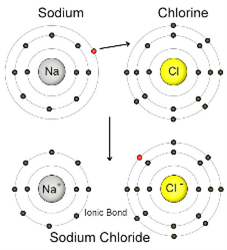
When sodium and chlorine atoms come together to form sodium chloride (NaCl), they transfer an electron.
Within plant systems, chloride is considered an essential micronutrient, required only in very small quantities. It contributes to key physiological processes such as photosynthesis (specifically in the oxygen-evolving complex), osmotic regulation, and enzyme activation. However, the threshold between beneficial and excessive concentrations is narrow. When chloride accumulates beyond optimal levels, it can lead to osmotic stress, reduced water uptake efficiency, leaf tip burn, and overall growth suppression, particularly in sensitive crops such as lettuce (White & Broadley, 2001).
In agricultural systems, chloride enters soils and hydroponic solutions through both natural and anthropogenic sources. Irrigation water is a major contributor, but an equally important source is potassium-based fertilizers. One of the most significant is potassium chloride (KCl), also known as muriate of potash. This compound is widely used because it supplies potassium, an essential macronutrient required in large quantities for plant growth, yield increases, and water regulation. However, chloride is co-introduced as part of its chemical structure. Because chloride is not extensively metabolized by plants, it tends to remain in solution or accumulate unless removed through leaching or hydroponic fluid replacement (White & Broadley, 2001).
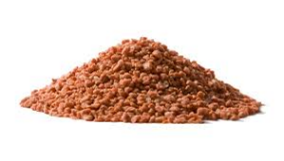
Muriate of Potash (MOP) in raw, granular form
Potassium chloride is the dominant global potassium fertilizer because of its economic and industrial advantages. It is extracted from naturally occurring potash deposits and requires relatively simple purification compared to other potassium fertilizers. As a result, it has become the most cost-effective source of potassium on a per-unit basis. In contrast, chloride-free alternatives such as potassium sulfate (K₂SO₄) and potassium nitrate (KNO₃) require additional chemical processing or provide multiple nutrients, making them significantly more expensive. Agricultural economic data from the Food and Agriculture Organization (FAO) and International Fertilizer Association (IFA) consistently show that potassium chloride remains the lowest-cost potassium fertilizer, while sulfate- and nitrate-based alternatives are typically 1.5 - 4.0 times more expensive depending on global market conditions.
These alternative potassium sources are primarily used in systems where chloride management is critical. Potassium sulfate provides potassium and sulfur without introducing chloride, while potassium nitrate supplies both potassium and nitrogen in a chloride-free form. These fertilizers are commonly used in controlled environment agriculture (CEA), greenhouse production, and research-based nutrient formulations such as Hoagland solution systems. However, their higher cost limits widespread use in large-scale commercial agriculture, where cost efficiency per yield remains a key constraint (Taiz et al., Plant Physiology and Development).
In hydroponic systems, nutrient solutions are continuously recirculated, meaning water and dissolved minerals are reused over multiple crop cycles. Research demonstrates that these systems are chemically dynamic rather than static, as nutrient concentrations shift over time due to plant uptake, evaporation, and repeated fertilizer additions (Goddek et al., 2015). This creates a system where nutrient balance must be actively managed rather than assumed to remain stable.
A key challenge in recirculating systems is the behavior of conservative ions such as chloride. Unlike nutrients that are actively incorporated into plant biomass or transformed biochemically, chloride does not degrade, volatilize, or readily precipitate. As a result, its concentration tends to increase gradually unless it is physically removed through water exchange or dilution.
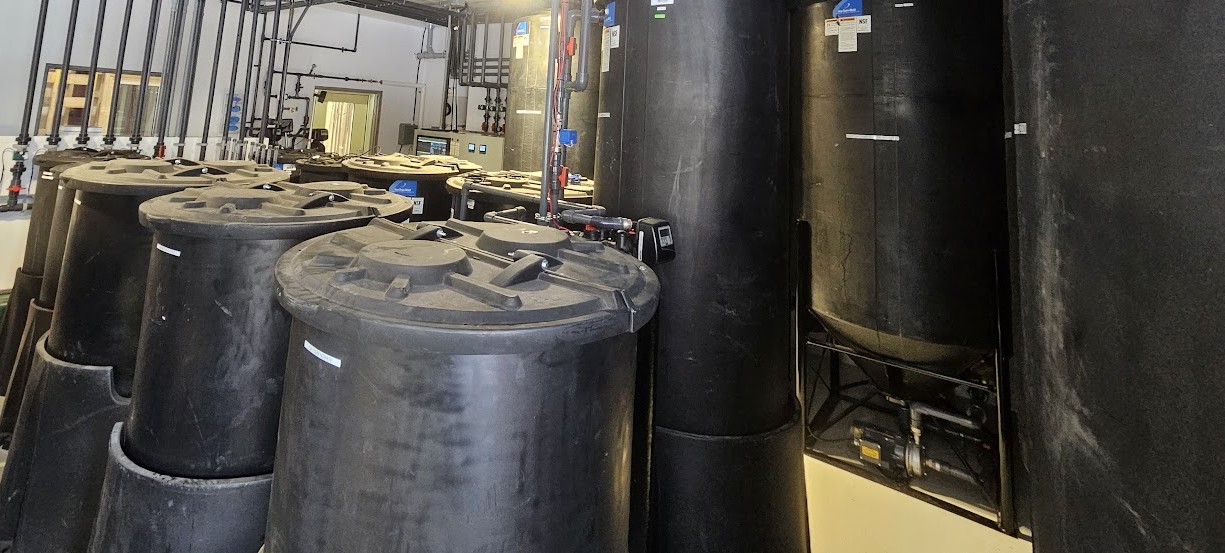
Example recirculating hydroponics system at AgriTech North
Commercial hydroponic fertilizers such as Masterblend 8-15-36 lettuce formula and Greenway Biotech Lettuce Fertilizer (8-15-36) and are widely used in these systems due to their balanced nutrient profile and affordability. This fertilizer supplies nitrogen, phosphorus, potassium, calcium, magnesium, and essential micronutrients required for lettuce production. However, part of its potassium source is derived from potassium chloride (muriate of potash), meaning chloride is introduced with each nutrient application. In addition, municipal tap water, commonly used in hydroponics, often contains background chloride concentrations ranging from approximately 10 to over 100 mg/L depending on local water sources and treatment processes (World Health Organization (WHO), 2017). In our own municipality of Dryden, Ontario, the 2025 Dryden Drinking Water System Annual Water Quality Report chloride itself is not reported; chlorine residual is 1.26-1.74 mg/L in treated water, and vinyl chloride is reported as <0.1 µg/L. Water samples collected from our municipal water on-site and sent to SGS Canada for independent testing reported chloride at 9 mg/L in 2025 and 15 mg/L in 2022. These baseline figures illustrate why at least annual water testing on-site for agricultural operations is required, as these residual and baseline levels of chloride must be factored into the fertigation, irrigation, and refresh scheduling.
When these inputs are combined in a recirculating hydroponic system using a fixed nutrient recipe, chloride accumulation follows a gradual but predictable pattern. With the baseline nutrient recipe, during the initial 2-4 weeks of using a brand new system, chloride levels remain relatively stable, although increases may occur due to repeated nutrient dosing and water evaporation. Between 4-8 weeks, chloride input begins to exceed baseline plant uptake. Beyond 8-12 weeks, chloride levels reach ranges that induce osmotic stress in sensitive crops if the nutrient solution is not refreshed or adjusted (White & Broadley, 2001). These timelines shorten relative to the basline levels of chloride and chlorine in the supply water source discussed prior. Also, if the hydroponic system uses a media that saturates, or any water remains throughout the system during refreshes, then prior chloride levels cannot effectively be returned to baseline, further reducing future refresh cycle timing.
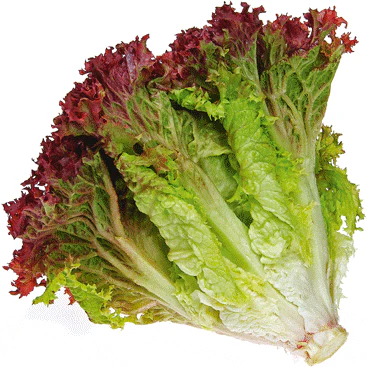
Example loose leaf lettuce from AgriTech North
Lettuce is considered moderately sensitive to salinity, and chloride is one of the primary ions contributing to salinity stress in hydroponic environments. While low concentrations are beneficial or neutral, excessive chloride can lead to physiological disorders such as tip burn, reduced leaf expansion, and decreased market quality. Hydroponic studies consistently show that lettuce performance depends strongly on maintaining balanced ionic composition, and that long-term deviation in nutrient ratios negatively affects both yield and crop uniformity (Goddek et al., 2015).
The chloride content associated with Masterblend fertilizer is primarily derived from its inclusion of muriate of potash (potassium chloride). This compound contains approximately 47-48% chloride by weight and is used because it is the most cost-effective potassium source available at industrial scale. Its economic advantage results from the abundance of natural potash deposits and relatively low processing requirements compared to sulfate- and nitrate-based fertilizers. However, this cost advantage introduces chloride into hydroponic systems, where it becomes a long-term accumulation factor in closed-loop operation.

We are routinely attempting to increase operational gains while lowering costs, but when does lower costs generate the opposite of our intention?
Because of this, Masterblend represents a cost-efficient but chemically chloride-influenced nutrient system. In hydroponics, chloride accumulation is not due to improper formulation, but it can be inappropriate in hydroponics rather due to the inherent nature of system closure and continuous nutrient recycling. Without periodic reservoir replacement, dilution, or nutrient recalibration, chloride and other ions gradually drift upward in concentration as plant uptake is insufficient to fully balance inputs over time.
In conclusion, chlorine exists primarily in nature as chloride, a biologically essential but low-demand micronutrient. In agricultural systems, chloride is introduced mainly through potassium chloride fertilizers such as muriate of potash, which are widely used due to their low cost and high potassium efficiency. In hydroponic systems using Masterblend fertilizer and tap water, chloride accumulates in recirculating solutions due to repeated inputs and limited biological removal. While lettuce can tolerate moderate chloride levels, long-term stability in such systems requires active nutrient management, including monitoring and periodic solution replacement. Therefore, Masterblend is an effective and widely used fertilizer for lettuce production, but alternatives without muriate of potash would reduce overall nutrient waste and extend the life of water in these systems.
Academic & Institutional References
- FAO. Fertilizer and Plant Nutrition Resources
https://www.fao.org/fertilizer-and-plant-nutrition/en/ - Goddek, S. et al. (2015). Recirculating aquaponics/hydroponics nutrient dynamics
https://doi.org/10.1016/j.aquaeng.2015.02.001 - International Fertilizer Association (IFA). Fertilizer statistics and reports
https://www.fertilizer.org/ - Marschner, P. (2012). Mineral Nutrition of Higher Plants. Academic Press
https://www.sciencedirect.com/book/9780123849052/marschners-mineral-nutrition-of-higher-plants - Taiz, L., Zeiger, E., Møller, I. M., & Murphy, A. (2015). Plant Physiology and Development (6th ed.). Sinauer Associates. https://global.oup.com/academic/product/plant-physiology-and-development-9780197619230/
- White, P. J., & Broadley, M. R. (2001). Chloride in plants. Journal of Experimental Botany
https://doi.org/10.1093/jxb/52.360.175 - World Health Organization (2017). Drinking-water quality guidelines
https://www.who.int/publications/i/item/9789241549950